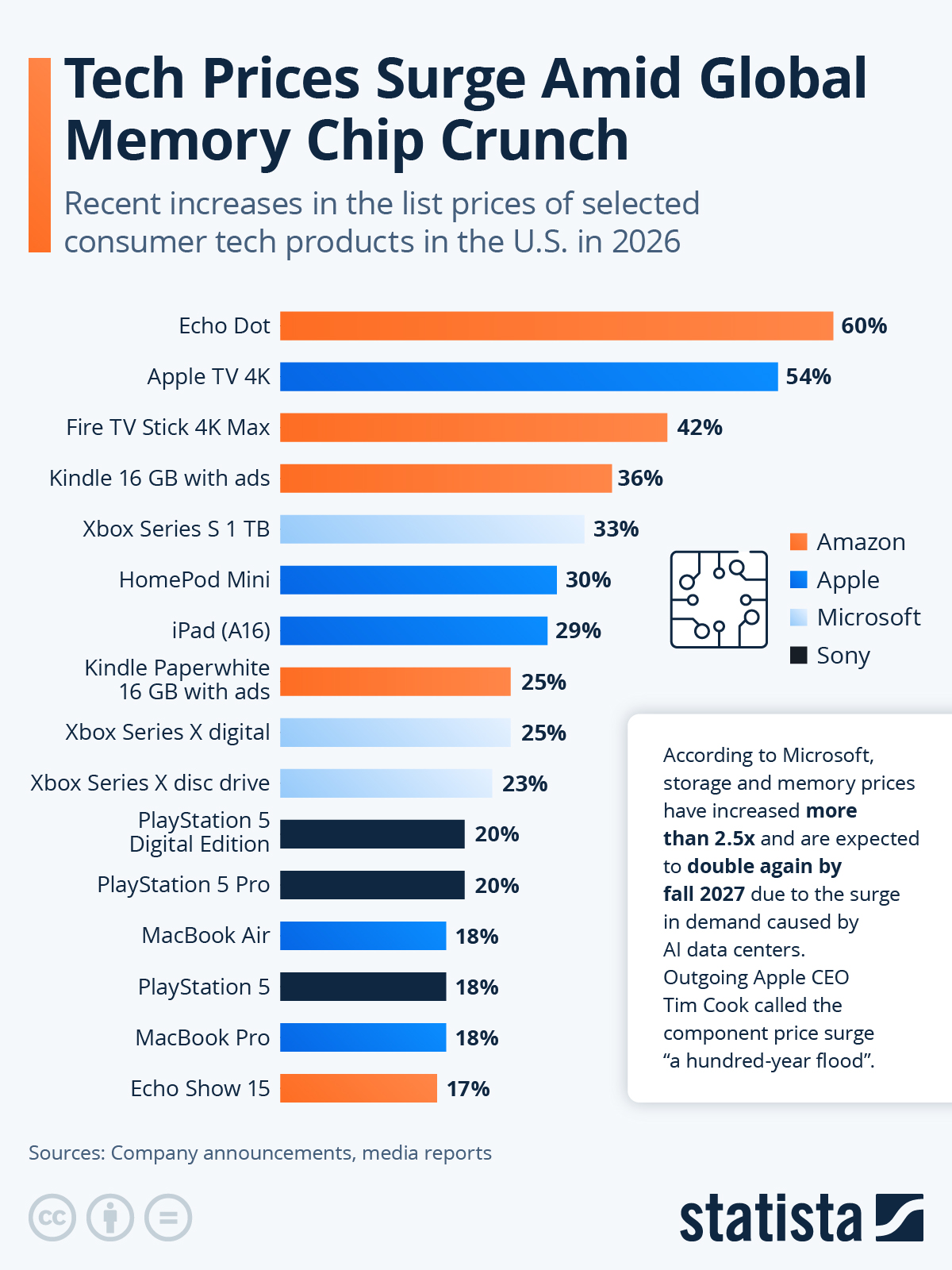
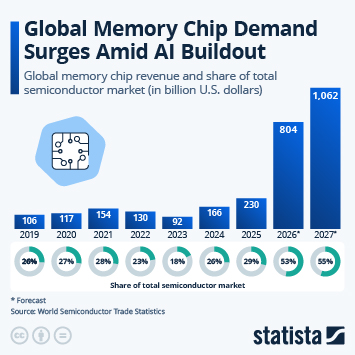
While the AI economy sometimes feels like a closed loop between hyperscalers, chipmakers and frontier AI labs, the massive investments in AI infrastructure have spillover effects on other markets. One of these markets is consumer electronics, which is struggling with the AI-induced surge in memory prices. As component costs rise, major manufacturers have increased U.S. list prices for selected devices by up to 60 percent in 2026.
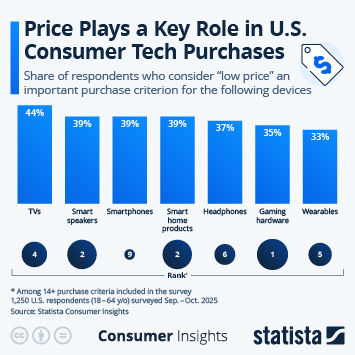
Sony and Microsoft, for example, were forced to increase prices for their video game consoles for the second time in less than a year. Microsoft said it had worked with suppliers for months to avoid another increase, but that “console storage and memory prices have increased by more than 2.5x” and could double again by fall 2027. Apple, meanwhile, has raised prices on products including its MacBooks, iPads, HomePod and Apple TV 4K, with the latter seeing a 54-percent price jump – for a device that hasn’t been updated since 2022. Apple’s outgoing CEO Tim Cook described the component price surge as “a hundred-year flood” and said that price increases were “unavoidable,” but it remains to be seen if cost-conscious consumers are willing to foot the larger bill.