Shein’s rise to global fame, or infamy in many ways, has been one of retail’s most remarkable growth stories in recent years. By using a data-driven model to turn social media trends into ultracheap clothing at a rapid pace, the Chinese online retailer quickly grew into a global fast-fashion heavyweight, challenging established brands such as Zara and H&M.
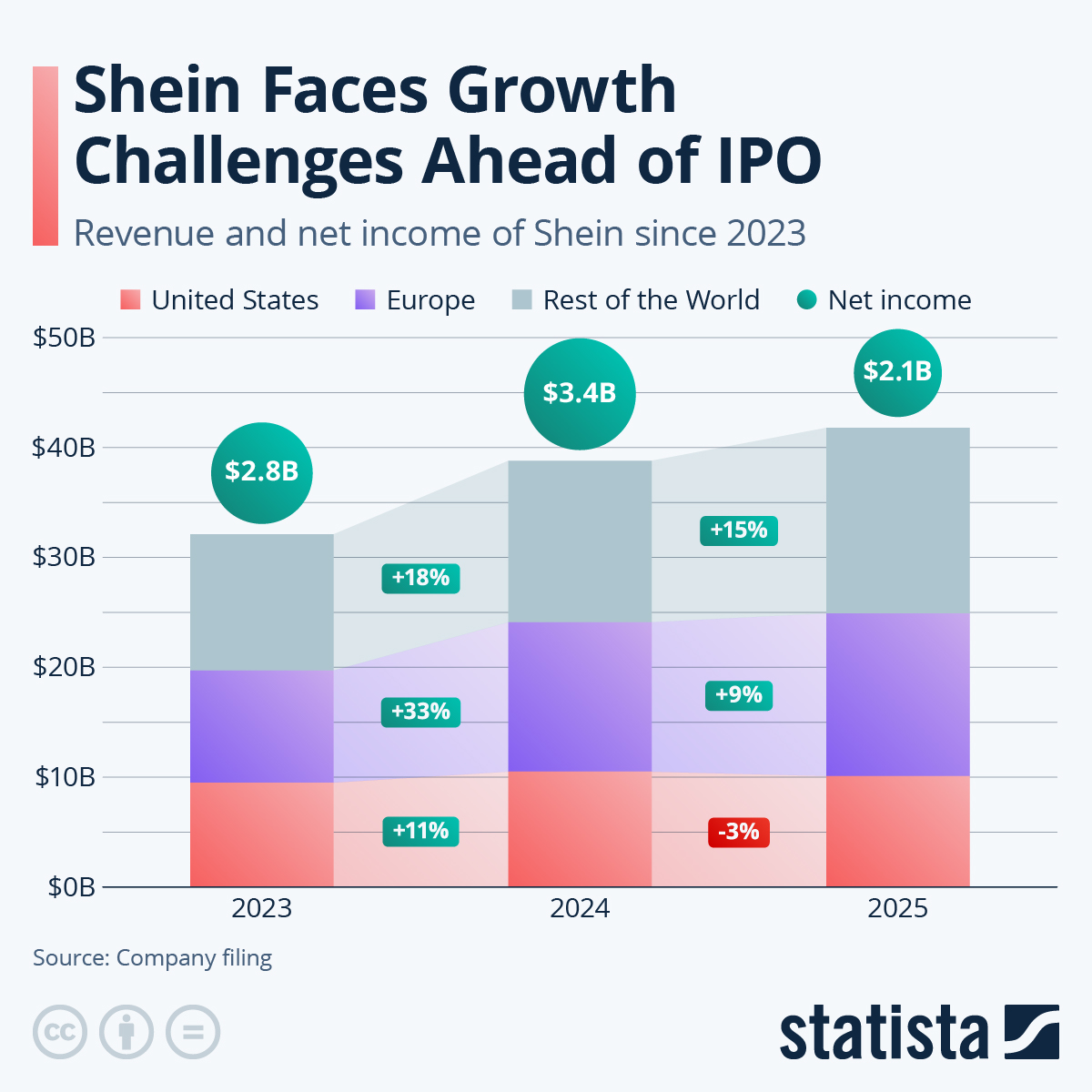
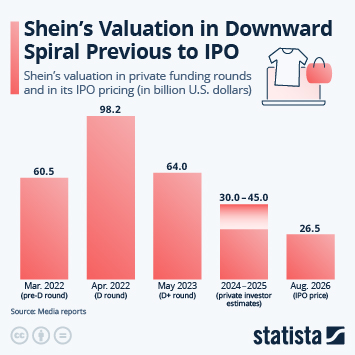
According to its IPO prospectus, Shein’s global sales climbed from $32.1 billion in 2023 to $41.8 billion in 2025. Yet the figures disclosed ahead of its initial public offering also show that the momentum is fading: revenue growth slowed from 21 percent in 2024 to 8 percent in 2025 to just 1 percent in the first quarter of 2026, partly explaining why the company’s IPO valuation is far below its peak private valuation of almost $100 billion.
The most notable slowdown came in the United States, where sales declined 3 percent in 2025 and 14 percent in the first three months of 2026, as the U.S. share of Shein’s global sales declined from almost 30 percent in 2023 to just 22.5 percent in Q1 2026. For years, Shein’s direct-to-consumer model benefited from the U.S. de minimis exemption, which allowed imports valued at up to $800 to enter the country duty-free. Its removal in May 2025, together with higher tariffs on Chinese goods, forced the company to raise prices in the U.S., taking away part of its appeal.
As our chart shows, sales growth also slowed notably in Europe, where the company generates roughly one third of its revenue. To make things worse, the company also faces an EU investigation under the Digital Services Act for a variety of potential violations, including its addictive design and the alleged sale of illegal products. The lowered IPO valuation likely reflects all of these challenges, as Shein’s low-price, high-volume, cross-border business model is facing an uncertain future.