E-commerce in Germany - statistics & facts
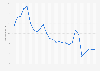
E-commerce has been one of the most profitable markets to come from technological advancement, yet it has not reached the same heights in Germany as in other advanced European economies: German e-commerce penetration stood at 74.55 percent in 2025, well behind Belgium, Sweden, and the Netherlands, each above 85 percent. Still, with penetration already covering most of the population, the market is experiencing steady, robust growth.
German shoppers research heavily before buying
Few German consumers buy on impulse. Checking the internet first was the behavior cited most often in data on attitudes toward online shopping, and customer reviews carry strong influence over the final decision. The pattern extends across categories: many consumers browse online for inspiration before buying home appliances, toys, games, or luxury fashion items, even when they end up purchasing in a store. Research has become the default starting point for a purchase, not an optional step reserved for big-ticket items.
Why and what e-buyers shop online
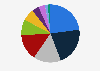
Shopping motivations vary by generation, but a few traits cut across age groups. Special offers remain highly persuasive, and most shoppers are still willing to pay more when quality is assured, a pattern that holds broadly across generations. Fashion is the category most associated with digital-first purchasing in Germany: online shopping category preferences place it ahead of home appliances and toys and games.
Amazon anchors a concentrated competitive field
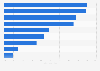
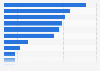
A handful of platforms capture most of Germany's online spending. Amazon's domestic storefront generated by far the highest net sales among the country's top online stores in 2025, ahead of eBay and Otto in second and third place. The same gap shows up in gross merchandise value, where leading online marketplaces place Amazon far above eBay and Otto in transaction volume. Within fashion specifically, Amazon also leads the top fashion e-commerce retailers, followed by Zalando, Shein, and Temu, showing how international players have gained ground in a once domestic-led category.
Germany's online retail market combines steady revenue growth with a shopper base that is research-driven, price-sensitive, and concentrated around a handful of dominant platforms. Spending per shopper is set to climb too. Average e-commerce spending per buyer is projected to rise from 1,850 U.S. dollars in 2025 toward 2,020 U.S. dollars by 2030, a sign that the marketplace leaders already capturing the bulk of consumer spending are well placed to absorb most of that growth.